Choose snowboard boots
Snowboard boots are the stiff, closed shoes that clamp a rider's feet into the binding and transfer every edge pressure from body to board, and a quality pair runs 200 to 400 USD for the 3 price tiers that cover entry, mid and pro models. They are the single most fit-dependent part of the setup, because a boot that fits the binding but not the foot turns the whole ride into a fight, while a boot that fits the foot makes an average board feel sharp.
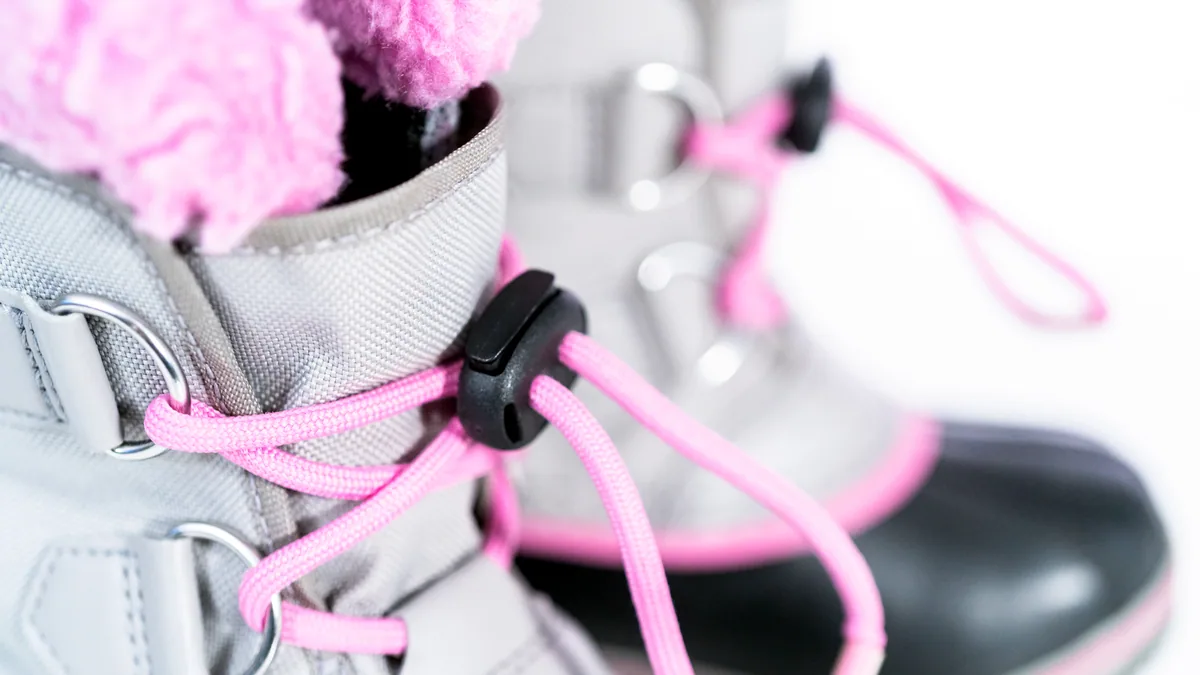
On this site the boots sit inside a wider catalog, so start with the overview of snowboard gear from board to boots to see how the boots, bindings and board size must agree before you buy any of the three. If the cold is the real problem rather than the boot, pick a snowboard jacket to close that gap first, and pair the boots with the protection covered in the snowboard helmet guide before you commit to the full kit. For the step-by-step method of sizing yourself, the snowboard buying guide walks through measuring, flex rating and closure type in order.
How snowboard boots should fit
To fit snowboard boots, the foot fills the shell with a small amount of intentional pressure rather than dead air, and the fit you want changes between the 10 minute break-in at home and the 1st day on snow.
- Length: toes touch the tongue when standing flat, then pull back 5 to 10 mm once you flex forward into a riding stance.
- Width: the forefoot wraps the liner snugly with no gap at the pinky toe, which is the sign of a shell that is too wide for your foot.
- Heel: the heel stays seated when you flex, and any lift above 5 mm means the shell is oversized and the edge control will lag.
- Closure: a ratchet or BOA dial should feel firm but never pinch the instep, and a pinched instep is the most common reason a "good" boot still hurts after 1 run.
Break the boot in at home for 2 to 3 days of 30 minutes each session, walking around in socks, and only then judge the fit on snow, because a stiff new shell always reads 1 size too small in the shop. If you have a narrow foot, look for a performance shell that is 100 to 110 mm at the forefoot, and if your foot is wide, look for a 120 mm or 130 mm shell so the liner has room to pack down instead of pinching.
What flex snowboard boots need
To match flex to the way you ride, read the manufacturer's 1 to 10 scale against your body weight and your board, because flex is what decides how much of your edge input the boot passes to the snow.
- Soft (2 to 4): freestyle and park riders who want a forgiving boot that lets the foot flex for grabs and landings.
- Medium (5 to 6): the all-round range that suits most all-mountain riders and the majority of the boots in the catalog.
- Stiff (7 to 10): freeride and heavier riders over 90 kg who want instant edge response and less boot collapse at speed.
The flex you choose should also match the bindings, since a soft boot in a stiff binding fights itself, and the rule is to keep the boot and binding within 1 step of each other on the scale so the 2 layers work as a single unit. A used boot that has already taken 200 or more days of abuse loses 1 to 2 points of flex, so treat a used flex rating as a starting estimate, not a fixed number.
Snowboard boots vs ski boots
Whether snowboard boots work for skiing comes down to 1 hard no, because the two boots are built for 2 different ways the foot meets the snow. A snowboard boot is soft enough to flex with the body while both feet stay locked to the same board, and a ski boot is hard enough to send a direct edge input while each foot works its own ski independently.
| Feature | Snowboard boots | Ski boots |
|---|---|---|
| Shell stiffness | Soft to medium, rated 1 to 10 | Hard, rated 60 to 130 flex index |
| Foot position | Both feet on 1 board, sideways stance | 1 foot per ski, forward stance |
| Closure | Lace, ratchet or BOA dial | Buckles and a power strap |
| Typical cost | 200 to 400 USD | 300 to 700 USD |
| Swappable liner | Yes, most models | Mostly no |
Wearing snowboard boots while skiing is possible for a casual walk to the bar but unsafe on a piste, because the soft shell cannot lock the ankle the way a ski boot must, and the binding interface is the wrong shape for a ski binding plate. Keep the 2 pairs separate, and if you run a mixed family of skiers and snowboarders, buy the boots for each discipline separately rather than sharing one pair.
Mens snowboard boots and how they differ
To pick mens snowboard boots, start from the last width, because mens and womens shells of the same model differ by 1 size of forefoot and 1 size of heel, not by a different design.
- Size: a mens 28 cm foot fits a mens US 11, while a womens 28 cm foot fits a womens US 12, so check the cm or UK column rather than guessing across the two ranges.
- Last width: mens performance shells run 100 to 110 mm and womens performance shells run 95 to 100 mm at the forefoot.
- Buys: a mens boot in sale often drops 30 to 50 percent at the end of the season, which is the same markdown as the womens range but with more size depth in stock.
The cost of snowboard boots and bindings together is the number to budget against, and for a mid-tier setup that is 200 to 300 USD for the boots plus 150 to 250 USD for the bindings, which puts the pair at 350 to 550 USD before the board. If you are buying a used boot to keep the cost down, check the closure, the liner and the sole for 3 signs of wear, a cracked ratchet, a crushed liner and a worn sole edge, and walk away if any of the 3 is present.
Sale snowboard boots and when to buy
To buy snowboard boots on sale, track the 2 windows when the price drops, because the markdown follows the season rather than the model.
- End of season: January and February, when last year's colorways clear at 40 to 60 percent off and the size run is still full.
- Start of season: late August and September, when new colorways land and last year's stock is still in the racks at a 20 to 30 percent discount.
The best snowboard boots are the ones that fit your foot within the flex range you need, and the sale is the moment to grab that pair rather than a cheaper boot that does not fit, because a 1 size wrong shell costs more in pain than the 100 USD you saved. Check the boots in the catalog for the sale flag, match the shell width to the measurement from the fit section above, and buy the pair in the flex band from the flex section so the 2 sections line up before you check out.