Snowboard goggle picks
Snowboard goggles are the 2-part optical shield fitted over the eyes on the helmet, made of a polycarbonate lens bonded to a foam or neoprene gasket, and their single job is to cut glare and block debris while keeping your vision sharp from noon sun to a grey afternoon. The catalog below lists every lens tint we stock with its VLT (visible light transmission) figure, because VLT is the one number that tells you which goggle will work in the light you actually ride. A goggle rated 35 VLT is built for bright sun and snow, a goggle rated 75 VLT is built for flat white-out and dusk, and a 50 to 60 VLT lens is the middle ground for mixed conditions.
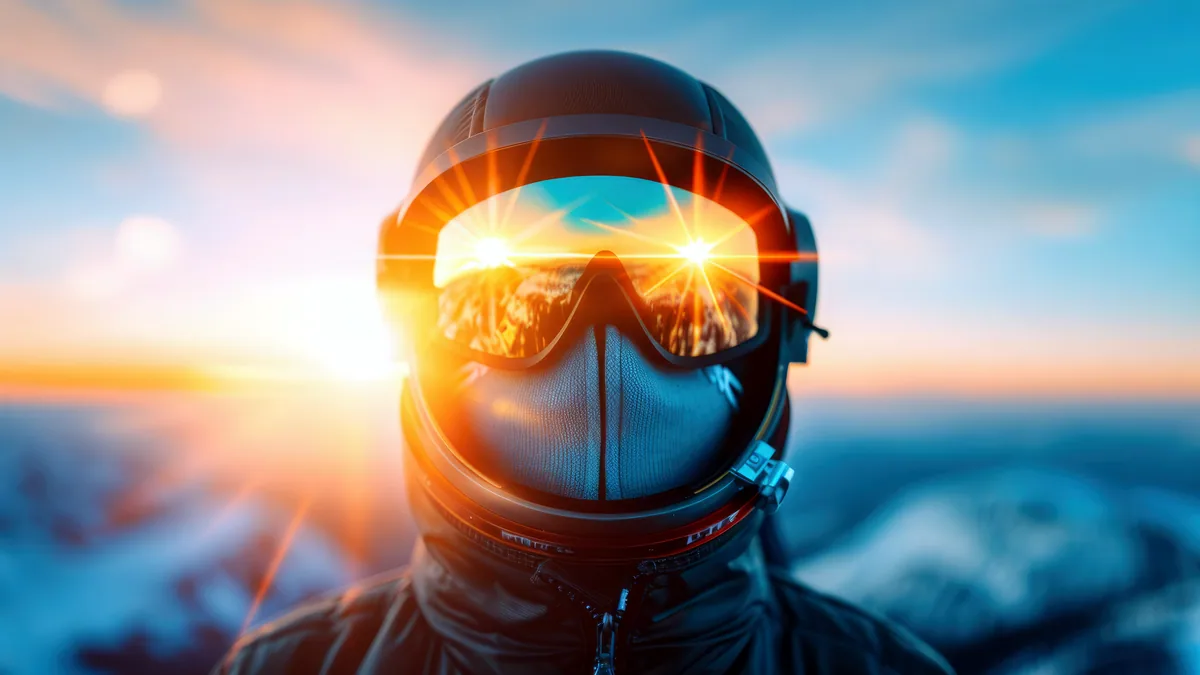
Every goggle here sits inside a larger Snowboard gear from board to boots lineup, and this page covers the eye piece of it. The same catalog logic runs through the rest of the shop: you Pick a snowboard jacket by warmth rating and seam taping, then Choose snowboard boots by flex index and last width, and the goggles are the one item where the spec that matters is a single number you can read on the lens itself. All of it, from the first wax to the last rinse, is the kind of Ski, snowboard and watersports kit, bought end to end that this site is built around.
Which VLT number matches the light you ride
Choosing a VLT number comes down to reading the sky. The table below is the quick reference we use on the floor: match the band to the hour and the cloud cover, and the lens does the rest.
| VLT band | Lens tint | Best when | Worst when |
|---|---|---|---|
| 10 to 20 | Darker smoke, gray | Bright sun, hard-packed snow | Overcast, late afternoon |
| 30 to 50 | Mirror, amber, brown | Mixed sun and cloud | Deep white-out |
| 55 to 80 | Clear, light yellow | Overcast, night, heavy snowfall | Blazing midday sun |
A rider who skis 11 a.m. to 2 p.m. on a clear day wants the low band; the same rider at 4 p.m. under cloud wants the high band. The rule of thumb is simple: the more light in the scene, the lower the number you need, and the less light, the higher the number.
How the anti-fog system is built
How the anti-fog system is built explains why one goggle fogs after 3 minutes and another stays clear for an hour. Every lens in the catalog is made of 2 layers of polycarbonate separated by a thin air gap, and that gap is what you are actually buying. The outer layer carries the VLT tint and the scratch coating, the inner layer carries the anti-fog coating, and the air gap between them is sealed so humid air from your breath cannot reach the inner surface as a free liquid. What the gap does is spread the moisture into a film below the visible threshold instead of letting it bead into droplets that blur your line. A single-layer lens has no gap, so any breath that reaches the surface becomes droplets, and that is why single-layer goggles fog within minutes in cold, humid air.
- Outer polycarbonate layer, tinted and UV-rated
- Sealed air gap, the anti-fog chamber
- Inner polycarbonate layer, anti-fog coated
- Neoprene or foam gasket, the seal against the face
- Elastic or strap with adjustment sliders, the hold on the helmet
When the gap does start to fog, the fix is airflow, not wiping. Open the vent slits on the top and bottom of the frame, or lift the goggle briefly to let dry air through, and the film inside the gap dries in about 30 seconds. Wiping the inner surface while you are riding smears the anti-fog coating and makes the next fog cycle worse, so the vents are the tool, not a cloth.
Which lens tint sharpens the line on the slope
Which lens tint sharpens the line on the slope is a question about contrast, not just brightness. Two lenses with the same VLT can look different on the snow because the tint filters out specific wavelengths. The three tints that cover most riding are:
- Amber or orange: lifts contrast on flat, low-light days and makes bumps read against flat snow
- Brown or rose: adds depth to the snow surface in mixed light and keeps colors natural
- Gray: filters evenly across the spectrum and gives the truest color in bright sun
A rider who mostly rides in the morning fog and the evening dark benefits from amber. A rider who rides midday sun benefits from gray. A rider who cannot pick one time of day and wants one pair for the whole season should look at a photochromic lens, which shifts its VLT between roughly 18 and 60 as the light changes, and that single pair covers both the noon run and the last lift of the day.
How the gasket and strap keep the goggle sealed
How the gasket and strap keep the goggle sealed is the part riders skip and then pay for on the hill. The gasket is a 10 to 15 mm deep foam or neoprene ring that presses against the face and blocks the two leaks that cause fog: cold air creeping in under the bottom edge and warm breath pushing up over the top. Neoprene holds its shape all season and washes clean, while a plush foam is softer on the skin but compresses after a few weeks of use, so a rider who rides 10 weekends a season usually moves to neoprene by mid-season. The strap needs to sit flat against the helmet, not over it, and the adjustment sliders on both ends should be set so the goggle holds when you tilt your head back on a jump without any pinch on the brow or the cheeks.
How to keep the lens clear all season
How to keep the lens clear all season is 2 habits, not a routine. The first is storage: the goggle goes in its hard case after every run, lens up, never in a bag with the strap wrapped around the lens, because the strap is what scratches the coating. The second is cleaning: rinse the lens with cool water before the trip home to remove grit, then a light pass with a microfiber cloth once the lens is dry, and no paper towels, no shirt hems, no lens cleaner that contains ammonia, because ammonia eats the anti-fog coating and the tint at the same time. Do the rinse and the dry-wipe, and the lens is good for the next run. Skip it and the grit you carried in on the snow scratches the outer layer, and that scratch scatters light into a permanent haze that no cleaning takes off.