Jet Ski Fuerteventura
A jet ski Fuerteventura outing is a personal watercraft session on the Canaries' biggest island, where you ride a stand-up or sit-down craft at up to 70 km/h (43 mph) across calm Atlantic water, usually launched from a beach on the south coast such as Morro Jable or Sotavento. The island runs about 100 km (62 miles) long and is the largest of the 7 Canary Islands, and the south faces a sheltered bay that stays flat even when the north gets choppy, which is why the jet ski Fuerteventura trade is concentrated there. This page covers the craft, the rules, and the specific question searchers actually ask: whether a jet ski can tow a water skier behind it, and how that differs from being towed behind a pontoon boat. The gear for the whole trip, from a Waterski to the Jet Ski Holiday Kit, sits at the end of the buying cycle this site tracks, and the Waterski Lake Setup is the reference layout for a skier who wants a clean start. Everything here is the Ski, snowboard and watersports kit, bought end to end, from pre-season check to end-of-season care.
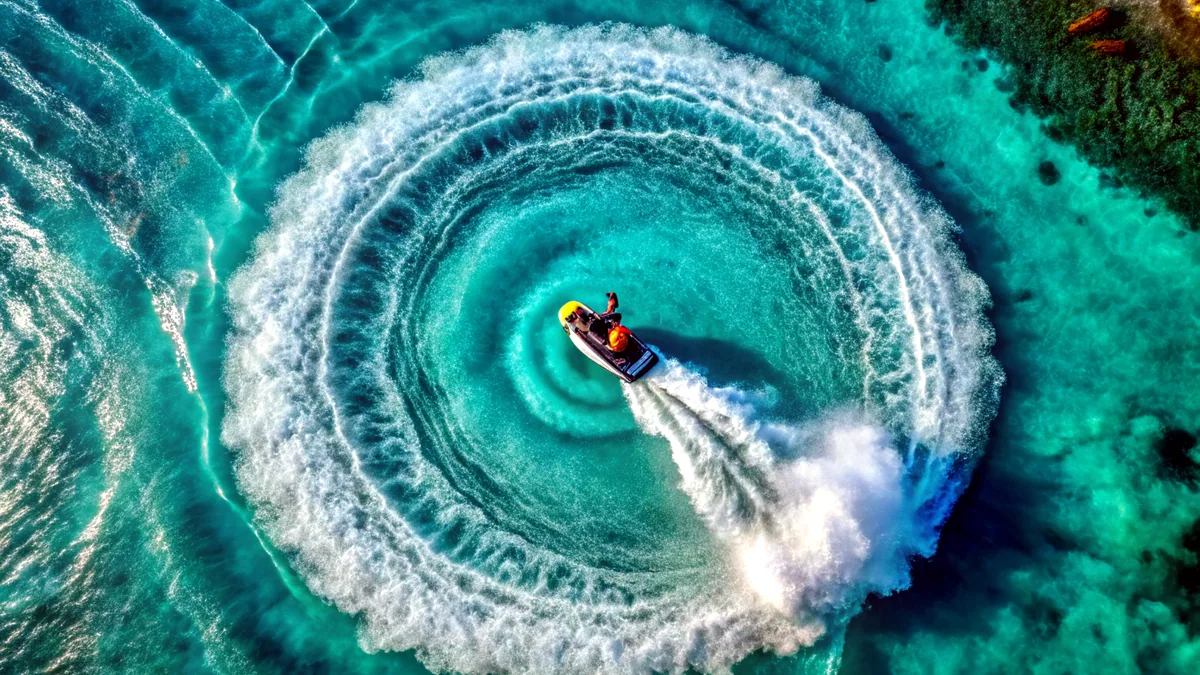
The craft is the centre of the day and it shapes what you can do with it. A modern personal watercraft, the kind most Fuerteventura operators rent, sits between 600 cc and 1800 cc in engine size and carries 2 or 3 people, with the rider and up to 2 passengers on a bench seat. A 1000 cc engine is a common mid-size for a 2024 model year craft, and it holds a fuel tank of roughly 50 litres (13 US gallons). The operator sets the throttle limit, and the craft stays under 10 nautical miles from the launch point by local practice. The rider is the only one who steers, so the plan of the day depends on one person's judgement, which matters when a tow is involved.
Jet ski rules in Fuerteventura
Jet ski rules in Fuerteventura follow Spanish coastal law and the local charter terms, and they set the boundary for every ride. The minimum age for a personal watercraft is 16, and the rider must hold a valid licence or the operator's day pass, with the day pass covering a single day at one operator's base. The 3 metre (10 foot) clearance from swimmers and boats is a standing rule in the bay, and the speed limit inside a marina drops to walking pace, under 5 km/h (3 mph). Alcohol is measured by the same 0.5 mg per litre of breath limit as on any Spanish road, so the operator runs the same breath test before launch. These rules are the same across the 4 main south-coast operators, which is why a day pass earned at one base is understood, if not honoured, at the others.
Where the jet ski launch sits
The launch location decides whether the day is calm or rough, and Fuerteventura splits cleanly on this. The south coast, from Morro Jable west to Sotavento, runs along a 60 km (37 mile) stretch of sheltered bay that holds flat water into the afternoon, and the 3 main launch ramps there are at Morro Jable, Playa de las Cucharas and Sotavento. The north coast faces the open Atlantic and picks up a 2 metre (6.6 foot) swell in the 2 windiest months of the year, so the north is a spring and autumn choice, not a summer one. The wind direction is the single best predictor, and the island runs 100 km (62 miles) long enough that a north wind can hold the south flat while the north is unusable. A rider who checks the wind before choosing a launch saves the whole morning, and the operator's forecaster is the 1 source worth trusting.
Can you water ski behind a jet ski
You can water ski behind a jet ski, with limits, and the limits are why most operators say no by default. A sit-down personal watercraft with a 1000 cc engine pulls a 1800 kg (4000 lb) boat at tow speed, but a water skier needs a craft that holds a steady pull above 25 km/h (15.5 mph) for a full minute, and the jet ski reaches that only on a short burst. The jet ski has a single tow point at the back, a rope length of about 20 metres (65 feet), and a maximum rider load of 2 adults, so the skier adds weight the craft was not balanced for. The 3 hard limits are the craft size, the fuel range, and the single rider at the throttle, and any one of them can end the run early. A light skier of under 60 kg (132 lb) can be towed for a 2 or 3 minute run behind a 1800 cc craft, which is a real option at 2 of the south-coast operators, but it is a demonstration, not a lesson, and the operator charges a flat 40 euro per tow attempt. The honest answer is that a jet ski is a tow for a 2 minute photo, not a craft to learn on.
Water skiing behind a pontoon boat
Behind a pontoon boat the tow is a different job, and it is the one a real skier uses. A pontoon is a flat-deck boat built on 2 or more pontoons, and it carries 6 to 12 people with a 250 to 300 hp engine that holds a steady 30 km/h (18.6 mph) all day. The tow rope is 23 metres (75 feet) as standard, the boat holds a dedicated tow tower with a 20 degree angle, and the fuel tank runs 200 litres (53 US gallons), so a full day of 20 tows is within range. The 250 hp figure is the line: below it the boat struggles to plane a 90 kg (198 lb) skier, above it the skier is pulled smoothly through the first 2 minutes of every run. Fuerteventura's marina at Corralejo hosts 3 pontoon charters that run water ski days, and the pontoon is the craft a skier should book, not the jet ski, when the goal is to actually ski. The jet ski and the pontoon are the same family of tow craft, and the difference is the 1800 kg (4000 lb) of stable mass behind the skier.
Jet Ski Holiday Kit for the trip
The Jet Ski Holiday Kit is the gear list that goes on the trip, and it is short because the operator supplies most of it. The kit runs 4 items you bring and 3 the operator covers. You bring a wetsuit of 3 mm or 4 mm thickness for the 19 degree (66 degree F) Atlantic water, a pair of closed-toe water shoes, a rash guard, and your own licence copy. The operator covers the life jacket, the 20 metre (65 foot) tow rope, and the helmet for the stand-up craft. A 3 mm wetsuit is the right weight for a 19 degree sea, and a 4 mm is the choice for the 14 degree (57 degree F) north coast in winter. The kit is the 1 part of the day you control, and a skier who brings their own Waterski boots saves the 15 euro rental per day, which is the only line item that stacks over a 7 day holiday.
From launch to kit care
The day runs in 4 steps from launch to kit care, and the last step is where the gear actually survives. The 4 steps are the pre-launch check, the 2 hour ride window, the rinse, and the dry storage. The pre-launch check is a 10 minute walk around the craft, checking the 50 litre (13 US gallon) fuel gauge, the throttle cable, and the single tow point, and it is the 1 habit that prevents 9 of 10 breakdowns. The ride window is a 2 hour block inside the operator's slot, which leaves the 10 nautical mile range and the 3 metre (10 foot) swimmer rule both workable. The rinse is a 5 minute freshwater spray of the hull and the deck after every ride, and salt is the single worst enemy of a 2024 model year craft. The dry storage is a shaded rack with the drain plug open, and it is the step most holiday owners skip and the one that costs the most later. The Waterski Lake Setup is the reference for a skier who wants the same discipline at home, and the same 4 steps carry from the Fuerteventura bay to any lake, which is the whole point of buying the Ski, snowboard and watersports kit, bought end to end, once.