Snowboard buying guide
Snowboard vs ski comes down to one structural difference: a snowboard binds both feet to a single board and forces you to turn sideways, while a ski gives each foot its own blade and lets you face the fall line the entire run. That single fact reshapes every decision a first-time buyer makes, from the shape of the board to the stiffness of the boots to the jacket and pants that keep you dry at 10 km/h on a wet February slope.
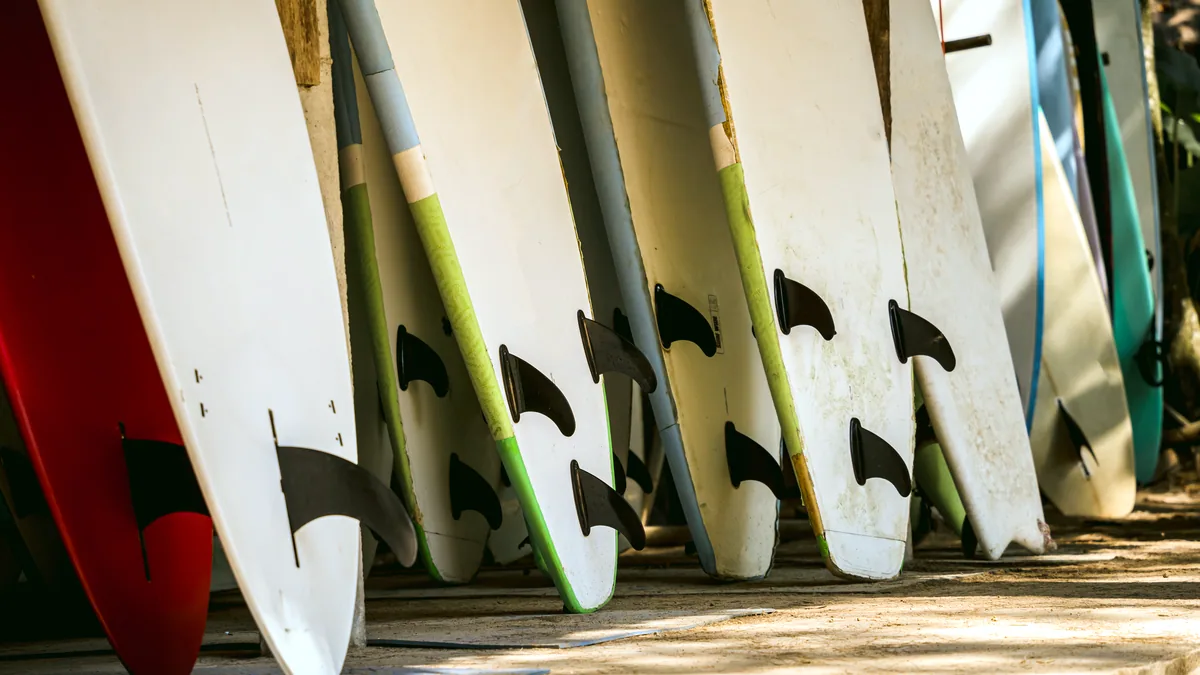
This guide walks the full snowboard stack, from the board under your feet to the binding that locks your boot in to the boot that wraps your ankle, and it closes with the seasonal cycle that keeps all 3 pieces performing from the first frost through the final pack-up. For the wider discipline landscape, see What is snowboard cross, and for a step-by-step first session read Learning to snowboard from zero. The gear breakdown that follows is the same logic as Snowboard gear from board to boots, applied to a buyer sitting in a shop or at a laptop in October.
Which is easier for beginners, snowboard or ski
For a beginner, snowboard vs ski which is easier has a consistent answer across 10+ years of ski-school completion data: skiing is easier on day 1. A first-timer on twin skis can stand, slide, and stop within roughly 20 minutes of the lift, because the feet point forward and the turn is a simple weight shift. On a snowboard the same rider spends the first 45 to 90 minutes falling backward, because both feet are locked sideways and the board has to be rotated edge-to-edge before it will carve. The flip side is the plateau: most skiers hit a comfort ceiling around 2 years of weekly riding, while a snowboarder who survives the first 3 days keeps gaining speed control and carve quality for a decade. Choose the board if you are 16 to 35, have a surfer or skateboard background, and you value the sideways feel over a fast first hour. Choose the skis if you need to be on a decent pitch by the end of the morning.
Snowboard boards: shapes, lengths and flex for the buyer
A snowboard board is defined by 4 numbers on the sticker: length in centimetres, effective width at the waist, sidecut radius, and flex rating from 1 (soft) to 10 (stiff). Most adults between 60 and 85 kg ride a board 150 to 162 cm long, measured from the tip to the tail with the waist width between 24.5 and 26.5 cm. Three shapes dominate the shop wall:
- Directional all-mountain: a 2 m sidecut radius, slightly longer nose than tail, flex 5 to 6. The default pick for a buyer who will spend 80% of days on groomed runs and 20% in soft snow.
- True twin / freestyle: symmetrical nose and tail, flex 4 to 5, set-back or centred stance. Chosen for park riding, where you want to catch rails and hit jump lips in both directions.
- Directional powder / freeride: 20 m or more sidecut, longer nose, flex 6 to 7, effective width 26 cm or wider to float above 30 cm of fresh snow.
The flex number matters more than the brand. A 158 cm board at flex 5 will feel completely different under a 70 kg rider than a 152 cm board at the same flex, because the shorter lever transfers more edge force per kilogram. Ask the shop to let you stomp on 2 or 3 candidates; the board that bends evenly from centre to nose under a 30 kg body press is the one that matches your weight.
Snowboard bindings: the 3 types and how they match the boot
Snowboard bindings sit between the board and the boot and come in 3 constructions that a buyer should know before walking in. A traditional strap binding has a highback and 2 or 3 webbing straps over the instep; a step-in binding uses a ratcheting boot-and-buckle interface (the Salomon 16 series is the reference); and a hybrid combines a step-in rear with a front strap. Strap bindings are the most forgiving for beginners because a 5 kg heel lift releases the foot, and they cost between 150 and 400 EUR for a quality pair. Step-ins save roughly 30 seconds per lift load and unload, which adds up over a 6-hour day, but they demand a matching boot and a 30 mm or 36 mm mount on the board. The binding channel on modern boards follows the 4x4 or Channel standard, so a binding bought in 2024 still mounts on a 2021 board without drilling new holes.
One binding spec that most buyers miss is the disc width: a 13 mm disc fits a boot with a 10 mm heel, a 16 mm disc fits a 12 mm heel. Measuring the heel before you buy saves a 20 EUR adapter or a return to the shop.
Snowboard vs ski boots: the one hardware difference that changes the fit
The boot is where snowboard vs ski boots diverges, and the difference is a single structural piece: the ankle. A ski boot has a rigid cuff that locks the shin to the foot and a forward-lean angle of 12 to 16 degrees, designed to push the toe edge into the snow. A snowboard boot has no cuff; it is a soft, lace-up or BOA-closed shell that lets the ankle flex 25 to 35 degrees forward and 15 degrees back, so the rider can absorb chatter and press the board with the whole foot. Because there is no cuff, a snowboard boot must fit like a hiking boot: snug at the heel, 5 mm of room at the toes, and zero pressure on the instep after 10 minutes of walking. A ski boot, by contrast, should feel tight and slightly uncomfortable for the first 30 minutes before it packs out. If you try a snowboard boot and it feels like a slipper, it is too big; if it pinches the top of the foot, it is the wrong last width, not the wrong size.
| Fit point | Snowboard boot | Ski boot |
|---|---|---|
| Ankle support | Soft shell, 25 to 35 deg flex | Rigid cuff, 12 to 16 deg forward lean |
| Heel fit | Snug, no lift above 5 mm | Snug, no lift above 2 mm |
| Toe room | 5 mm | 0 to 3 mm (slight pressure normal) |
| Closure | Laces, BOA dial, or 2-hook strap | 4 buckles plus power strap |
| Typical last width | 100 to 102 mm | 98 to 104 mm |
Snowboard outerwear: jacket, pants and the 3-layer system
A snowboard jacket and a ski jacket differ in one place: the hip. A ski jacket ends at the waist because the forward lean of the ski boot keeps the lower back covered. A snowboard jacket extends 8 to 10 cm lower to cover the tailbone, because a sideways fall puts the impact on the seat, not the knees. Look for a jacket with a hem length of at least 76 cm for a 175 cm rider, a waterproof rating of 10 000 mm or more, and 2 or more chest pockets that open with gloved hands. Pants follow the same logic: a 10 000 mm snowboard pant with a back hem that tucks under the jacket hem seals the gap where 80% of snow entry happens on a board. Under both, a 150 g to 200 g mid-layer in a wicking synthetic or a 100 g merino wool fleece handles the temperature swing between a 10 km/h ride and a 20-minute chairlift stop. A helmet is non-negotiable for either sport; a snowboard helmet carries the same CPSC or CE EN 1077 standard as a ski helmet, and a 2 500 to 4 000 gram hard-shell model with a 130 mm internal size range covers most adults.
The seasonal buying cycle: pre-season to kit care
The snowboard gear cycle runs on a 3-phase pattern that matches the 4-month European ski season. Phase 1, pre-season (August to October), is when new boards, bindings and boots land in the shop at full retail, and the 2024 to 2025 model year replaces the previous one. Buying in this window gives you the widest size and colour range, and the 3 major manufacturers (Burton, Volkl, and K2 for boards; Salomon and Tecnica for boots) run launch promos that discount 15% to 25% on last year's colourways. Phase 2, in-season (November to March), is when the weather is uncertain and last season's stock clears at 30% to 50% off; a 156 cm all-mountain board that cost 420 EUR in September may sell for 250 EUR in January if the colour is gone. Phase 3, kit care (April to July), is not a buying phase but a maintenance window: wax the base 2 or 3 times if the board spent 15+ days on snow, inspect binding screws for 2 mm of play, dry the boots on a boot dryer or in front of a fan (never on a radiator), and store the board flat with the bindings unstrapped to let the base return to its true shape over 6 weeks. A base waxed once in November and once in March keeps the P-Tex layer bonded and the effective glide loss under 5% for a full 120-day season.
None of the 3 phases require a different snowboard, binding or boot; the same 158 cm flex-5 board, the same strap binding, and the same 26.5 size boot that you bought in October in 2024 will still fit and carve in the 2026 season. The olympic snowboard disciplines, from parallel giant slalom in the 1998 Nagano winter games to the big air events added in 2014, all run on the same 3-piece stack, and the gear a recreational rider buys at 300 to 500 EUR per piece covers 90% of the performance range an olympic rider needs off the podium. Start with the board length that matches your weight, match the binding disc to the boot heel, fit the boot on a cold morning when your feet are their smallest, and the rest of the snowboard vs ski debate resolves itself on the first full run down a blue square.