Waterski
Waterski is a towed surface sport in which a rider stands on a pair of narrow 1.80 m skis, linked at the toe by a crossbar, and holds a single rope that runs to the bow of a speedboat travelling between 28 and 46 km/h. Peakline Watersports stocks the full waterski equipment line: slalom and trick skis, 3-point bindings, 18 m and 23 m ropes, gloves, wetsuits, drysuits and impact protectors, so that a first-timer or a slalom competitor can buy every piece of waterski gear on one shelf rather than chasing five different suppliers.
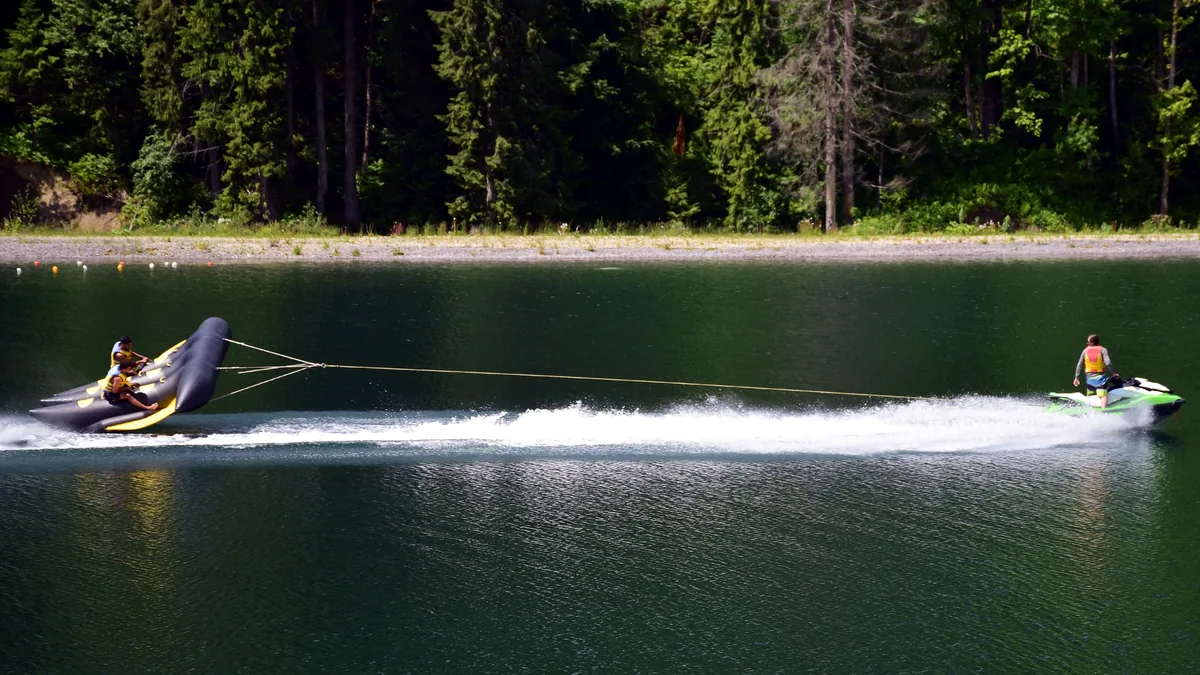
The wider Peakline catalog carries adjacent disciplines, from Jet Ski Fuerteventura boards to a complete Waterski Lake Setup package that pairs skis, rope and a 40 N buoyancy aid. The same buying logic applies across the range, so shoppers who also browse Snowboard gear from board to boots will find the same fit guidance, sizing tables and seasonal pricing on every page.
What Waterskiing Is and How It Differs From a Wakeboard
Waterskiing puts two independent skis under the rider, one per foot, while a wakeboard fixes the rider to a single 1.45 m board with a 4-point boot system. The two-ski stance lets a waterski rider carve edge to edge without rotating the board, which is why slalom skiers can swing 14 m past a buoy in a single turn. Peakline carries both disciplines side by side; a wakeboard suits a rider who wants to jump and rotate in the air, whereas a waterski rig suits a rider who wants sustained edge pressure, long carve lines and the ability to ride at speeds up to 56 km/h in slalom competition.
Water Ski or Waterski: One Sport, Two Names
Water ski and waterski refer to the same discipline, the same equipment and the same 1966 founding of the International Waterski and Wakeboard Federation. The two-word spelling appears more often in British and Commonwealth usage, while the single word dominates in North American trade and in the federation's own competition rules. Peakline uses "waterski" in every product title and category path so that a search for either spelling lands on the same catalog pages; there is no separate "water ski" section to check twice.
Why the Spelling Split Mattered for Shoppers
The split dates to the 1968 merger of the International Water Ski Federation with its wakeboard division, after which "waterski" became the official competition term while recreational marketing kept the two-word form. A shopper comparing reviews will meet both spellings within the same product listing, so the practical rule is to treat them as identical and to check the SKU, not the spelling, before buying.
Waterski Gear: the Core Equipment at Peakline
The waterski gear range at Peakline covers six categories, and every category is stocked in at least 3 distinct price tiers so that a 12-year-old beginner and a national-team slalom skier browse the same aisle.
| Category | What it does | Peakline range | Typical fit note |
|---|---|---|---|
| Slalom and trick skis | Cut the water and carry the rider's edge load | Skis from 0.13 to 0.21 m in width; lengths 1.80 m | Wider skis for beginners; narrower for slalom at higher speeds |
| Bindings | Lock the boot or bare foot to the ski toe | 3-point adjustable toe plates; 4-point boot systems for wakeboard | Toe plate sits 5 to 8 cm forward of the toe |
| Ropes | Connect rider to boat at a fixed or variable length | 18 m slalom rope; 23 m trick rope; 46 m rescue line | Slalom rules fix the rope at 19.05 m; recreational riders use 18 m |
| Gloves | Protect the palm and wrist on falls and rope handling | Leather-palm, mesh-back; foam-padded wrist guards | Snug fit, no gap at the wrist; test grip in cold water |
| Wetsuits and drysuits | Thermal protection in water below 15 C | 3 mm wetsuit for summer lakes; 5 mm drysuit for autumn and winter | Drysuit seals at neck and wrists; check both before the first pull |
| Impact protectors | Shield ribs, shoulders and back on hard water | Full-body vest; back-only protector; shoulder cap | Wear under the life vest, not over it |
Peakline pairs each waterski ski with a matching binding at checkout, because a binding that does not align with the ski's toe width throws the rider's weight 3 to 5 cm off centre on every pull. The rope is the one item most riders overlook: a 18 m rope gives the right pull angle for slalom, while a 23 m rope suits trick runs where the rider needs a longer arc to set up a jump. A 46 m rescue line stays coiled at the boat for any accident, whether the rider has slipped off at the start line or capsized mid-carve.
Waterski Gloves: What to Look For Before the First Pull
Waterski gloves do one job, and they do it for the 2 to 4 seconds of a fall, when the palm hits the rope, the crossbar or the water at 30 km/h. Peakline stocks 2 glove types for waterskiing. The leather-palm, mesh-back glove grips the rope handle without the rope biting into the fingers, and the mesh keeps the hand dry so the rider still has dexterity for the next pull. The foam-padded wrist-guard version adds a 6 mm neoprene layer over the wrist joint, which is the part of the hand most likely to hyperextend when a rider lets go mid-turn. A waterski glove costs a fraction of a pair of skis, yet the 2014 European Waterski and Wakeboard Federation injury audit recorded that hand and wrist contusions made up 19 per cent of all reported accidents in junior competitions, the single largest body-part category. Fit matters more than brand: the glove should sit flush at the wrist with no gap, and the palm should feel snug when the rider grips a 28 mm rope handle. If the palm slides a centimetre when the fist closes, size down.
UK Waterski Racing: Competition Formats and Peakline Support
UK waterski racing runs under the British Waterski Federation, which feeds teams into the European Waterski and Wakeboard Championships held in rotating host countries such as Antwerpen in Belgium and Lake Almere in the Netherlands, and into the world championships that the federation rotates between Australia, the United States and European venues. The two main competition formats are slalom, where a skier chases a 14 m turn past a buoy at progressively higher boat speeds up to a maximum of 56 km/h, and trick, where a skier performs aerial and carve manoeuvres over a 75 m course and is scored on difficulty, style and execution. Broadcasting of the European finals has expanded since the 2022 cycle, with live waterski results streamed through the federation's own channel rather than through traditional sports networks, so a UK club can watch a European slalom final on the same evening as it is raced.
Peakline supports the UK racing pipeline with a dedicated competition tier: slalom skis sized to the rider's weight per the federation's 0.13 m minimum width rule, 19.05 m ropes to the exact competition spec, and impact protectors that meet the mandatory vest standard. A club that buys its race kit through the Peakline catalog gets the same 30-day exchange window as a recreational buyer, which matters when a 14-year-old grows 6 cm over a winter and the binding no longer seats correctly.
Buying Waterski Equipment at Peakline: Fit, Season and Care
Peakline runs a 3-step fit process for every waterski order. First, the rider selects ski width from the weight table: under 50 kg takes a 0.18 to 0.21 m ski, 50 to 80 kg takes a 0.15 to 0.18 m ski, and over 80 kg takes a 0.13 to 0.15 m ski, with slalom skiers dropping one size for the higher edge load. Second, the binding is matched to the ski's toe plate so that the foot sits level and the ankle does not twist under load. Third, the rope length is set to the discipline: 18 m for slalom practice, 23 m for trick and recreational runs. Peakline stocks waterski equipment year-round, but the seasonal cycle matters for pricing and for fit: the pre-season window from February to April carries the widest range and the first-of-season prices, the summer months from June to August see the most beginner sales and the fastest turnover of small children's sizes, and the post-season clearance from September to November drops prices by 20 to 30 per cent on last year's binding and glove stock. After each season, a waterski rig needs a 10-minute care pass: rinse the skis and bindings in fresh water to remove lake minerals, air-dry the gloves and wetsuit away from direct heat, coil the rope so it does not kink, and check the binding screws for the 1 mm of play that signals a loose thread.
The Peakline waterski catalog is the single place where a UK shopper can go from "I have never been on a pair of skis" to "I am entered in the next regional slalom" without leaving one store, and the same 3-step fit logic, the same 2-glove choice, the same rope-length table and the same seasonal care routine apply at every stage of that climb.