Learning to snowboard from zero
Snowboard lessons are guided coaching sessions where a certified instructor teaches a rider to stand, balance and turn on a snowboard, usually across 3 to 8 hours over a first week on the slopes. They exist because a first snowboard turn is genuinely hard: the board is fixed to both feet at 90 degrees to the direction of travel, so your lower body and your upper body must rotate in opposite directions on every single turn, a coordination pattern most people have never practised. A lesson compresses the learning curve from several bruised days to roughly 1 first day on the board.
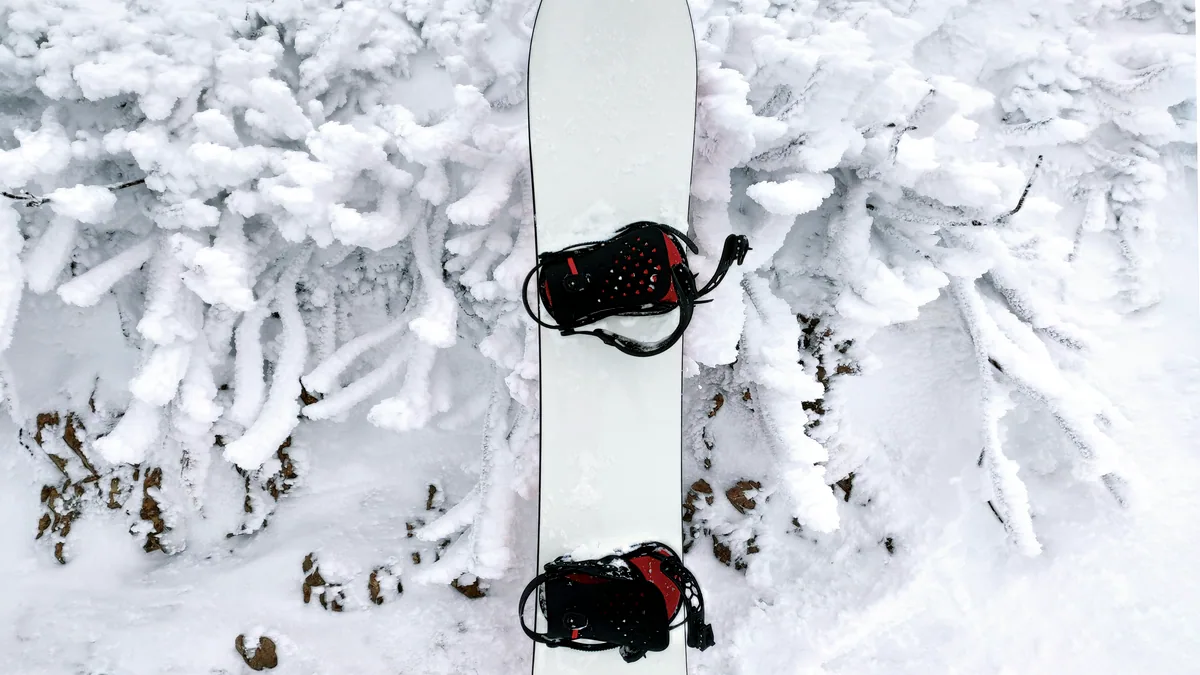
Two decisions matter before you book. The first is the lesson format, and the second is the resort, where the snow, the lift lines and the price per hour all shift from one mountain to the next. If you are still choosing the board itself rather than the lesson, keep the size and flex guidance from a Snowboard buying guide beside this plan, because the equipment you learn on shapes how the first turn feels.
How much do snowboard lessons cost
How much do snowboard lessons cost is one of the first questions a new rider asks, and the answer is a band, not a number, because a day pass, a lift ticket and the instructor all ride together in the price. A typical private lesson runs 4 to 6 hours. A group lesson of 2 to 8 people costs less per person because one instructor splits across the board. In the table below, a 5 hour private session sits at the top of the range and a half day group session of 3 people sits near the bottom.
| Lesson type | Group size | Length | Typical price |
|---|---|---|---|
| Private | 1 to 2 riders | 4 to 6 hours | 450 to 650 per day |
| Semi private | 3 to 4 riders | 4 hours | 300 to 420 per day |
| Group | 5 to 8 riders | 3 to 4 hours | 180 to 280 per day |
The price moves with the season. In the first 2 weeks of the season, when the snow base is thin, some resorts cut the rate by 15 to 20 percent. A lift ticket alone runs 60 to 90 per day at a busy mountain, so the lesson fee is only part of the day cost. Budget for a day pass, the lesson and a meal, and plan on 250 to 400 per day all in.
Where to find lessons near you
Where to find lessons near you comes down to three channels, and each one answers a different situation. The resort school at the mountain you are visiting is the most common option, because you are already there and the instructor knows the beginner area by name. A private instructor, booked through a local board shop or an online directory, costs more but follows your pace rather than a group schedule. An online video course, often 30 to 60 minutes of structured clips, costs 20 to 50 and works best as a warm up before you arrive, not as a replacement for time on the snow.
Resort choice changes the experience, and two names come up constantly for a first rider. Queenstown on New Zealand's South Island is a global snowboarding hub with a large beginner terrain park and a long season that runs from June through October, which is why a search for lessons there returns dozens of schools. Perisher in New South Wales is Australia's largest ski resort, a 1,600 vertical mountain built around 200 acres of snow, and its beginner area is wide enough that a first day rarely feels crowded. If your home range is down under, that is where you start.
What happens in a first lesson
What happens in a first lesson follows a fixed sequence, because an instructor cannot teach a turn until you can stand up on your own. The first 30 to 45 minutes is equipment and stance: the instructor sets your bindings, checks that your boots fit with no dead space at the heel, and gets you up and down on a gentle slope until the board feels like an extension of your legs. Stance width for a first rider is usually set at shoulder width, then adjusted by 2 to 5 centimetres once you have ridden a few turns.
- Getting up and down: you practise falling, lifting one boot, and sliding to a stop in a controlled line.
- The side slide: you learn to point the board straight down the slope and use the edge to slow, which is the foundation of every later turn.
- The first fall line turn: you rotate your shoulders to point the nose uphill, and the board arcs across the slope on its heel edge.
- The linked turn: you add the toe edge and connect 2 to 4 turns in a row, which is the milestone that ends a typical first day.
Most first timers make their first clean linked turn within 2 to 3 hours of riding. After that the day is about repeating the pattern until it stops feeling like a puzzle. Fatigue, not ability, is the usual reason a lesson ends early.
How many lessons do you need
How many lessons do you need depends on the goal, and the goal sets the number. To make your first independent linked turn, 1 lesson is often enough for a fit, coordinated adult. To ride a blue or intermediate run on your own, plan on 2 to 3 days, roughly 8 to 12 hours of instruction. To feel confident at the end of a week and link turns both sides without thinking, 4 to 5 days is a realistic target.
- Day 1: stand, slide and make a first fall line turn.
- Day 2: link 3 to 5 turns on a gentle slope.
- Day 3: add the toe edge and ride a wider beginner run.
- Day 4: shape turns and pick a line, moving toward a blue run.
- Day 5: consolidate, add a small jump or a banked turn, and ride unassisted.
A gap between days helps more than people expect. A 1 day break after the first 2 sessions lets the muscle memory settle, and riders who return on day 4 typically pick up faster than those who grind 5 days straight.
Which lessons suit a first rider
Which lessons suit a first rider is a question of format, not of difficulty, because every beginner course starts from the same standing up. A group lesson of 5 to 8 riders is the best value for a first day, because you watch other people make the same mistakes and correct them, which teaches faster than an instructor explaining in the abstract. A private lesson of 1 to 2 riders is the faster path if you are athletic and want to move past the beginner area within a single week, trading the group's social pace for direct, continuous feedback.
The instructor's certification matters as much as the format. A recognised body such as the National Outdoor Guidance Standard, or the local national snowsport association, sets the minimum hours and assessment before an instructor may lead a beginner group. When you book, ask for the instructor's certification level, not just the school's name. A higher level on the first day costs a little more and shortens the learning curve.
A few formats sit outside the beginner range and are worth naming so you do not book the wrong one. Freestyle lessons, focused on jumps and rails, assume you can already link turns both sides and are a poor fit for a first week. A freeride or off piste course assumes confident intermediate riding and is off the table until at least 2 full seasons of on piste time. Snowboard cross is a timed racing discipline where riders drop a course of 12 to 15 gates, jumps and berms, and it is a sport you adopt years after your first lesson, not a starting point. For a rider planning a trip beyond the snowboard slopes, the broader Snowboarding in Australia page covers where the season runs and which resorts suit a first visit. And if the holiday extends past the last day of snow, a list of Camping gear and games keeps the trip going back at the cabin.
Gear and conditions for a first lesson
Gear and conditions for a first lesson come down to two things: the board and the surface. A first rider wants a softer flex board, because a soft board forgives a late turn and a wobbly edge, while a stiff performance board demands the coordination you have not built yet. The size should match your height and weight, which is why the numbers in a Snowboard buying guide matter here. The surface you learn on should be a groomed, packed slope, not fresh powder, because a firm, even surface gives the edge a predictable bite. Fresh, deep snow turns the board into a sled and hides the line, so instructors keep first riders on the corduroy until the turn is automatic.
Conditions also set the time of day. The first 2 hours after the lifts open are the best window for a beginner, when the morning snow is firm and the beginner slope is clear of the afternoon traffic. By mid afternoon, the same run is crowded and the surface is churned, which makes a first turn harder than it should be. Book the early slot, and if a lesson is offered as a 4 to 5 hour morning block, that is the one to take.
Three small details round out the day. Wear a helmet with a proper fit, not a borrowed one, because the first falls are the most frequent. Use gloves with a stiff back rather than soft fabric, so the board edge does not press through on a slide. And bring a base layer you can remove, because a beginner works hard and runs warm within the first 30 minutes. Get those three right and the only thing left to learn is the turn.